Take a look at this house.

It’s made almost entirely of glass.
It’s full of light, and nothing about it is hidden… you can stand on the lawn and see everything inside.
And at first glance, the AI boom looks every bit as beautiful.
We have chips so powerful that the company that makes them is now worth more than $5 trillion.
We have the richest companies on Earth racing each other to build data centers the size of small towns…
And a stock market that has added about $33 trillion since the first chatbot launched.
We have modern miracles most people couldn’t have dreamed of five years ago.
Many of us even have AI helpers to plan our trips, help our kids with their homework, sort our paperwork and answer anything we ask, whenever we choose.
But things aren’t always as good as they first appear.
You see, the AI boom isn’t built out of brick and steel. It’s built like this glass house.
And that’s the strange thing about this boom.
Nothing I’m going to show you today is a secret.
Every loan, every lease and every promise is written down in a filing somewhere, sitting in plain sight where anyone can read it.
The walls are see-through.
Almost nobody looks through them.
And while everything looks amazing from the outside, I’m here today to warn you about the cracks that have quietly started spreading through that glass.
Throughout this letter, I’m going to show you what these cracks are and how they will lead to a collapse unlike anything we’ve seen in our lifetime.
However, these cracks are not the core of our problem.
They are merely symptoms of a much greater disease.
You see, these cracks are not forming on their own, and they are not forming by chance.
These cracks are forming because the walls of this whole $33 trillion house are made of glass… and the men who built it keep stacking more borrowed weight on top of them.
You will be shocked at why the glass is this thin.
Ironically, much of the boom’s success is tied to this very problem.
You see, this glass was the exact reason the AI companies were able to build their giant data centers, buy millions of chips and put a chatbot in every phone.
It’s why they were able to make AI look so amazing over the last three years.
But the first cracks have already appeared, one loan at a time.
And there’s something you need to know about glass.
It gives you no warning.
It doesn’t sag like wood, and it doesn’t lean like brick. It holds… and holds… and holds… and then it shatters all at once.
There is nothing, absolutely nothing, that can stop a crack in glass from spreading.
There’s no Fed rescue big enough…
No interest rate cut deep enough…
And no government bailout large enough to prevent the inevitable.
In fact, it’s a curse on you and your family.
As you’ll see in this letter, there’s little time left to prepare.
According to my research, this collapse isn’t coming in a year, six months or even three months.
It’s already begun.
Things are starting to come apart fast, as the AI boom is being hurled into the worst debt bust Wall Street has ever seen.
Who I Am
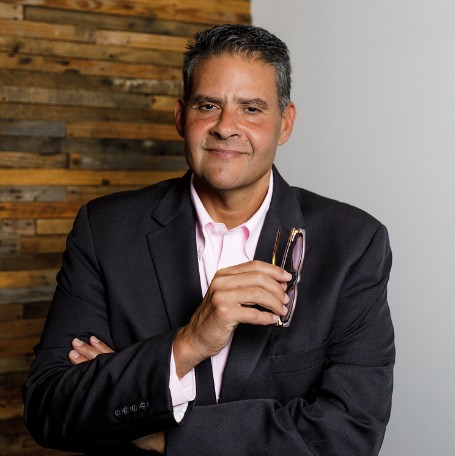
My name is Dylan Jovine.
And while I may be using a pretend glass house to make a point, make no mistake: the cracks forming underneath the AI boom are real, and they are spreading at this very moment.
And when this curse sends everything crashing, it will be devastating for those who aren’t ready.
I know what I’m saying to you right now might sound extreme.
Perhaps you doubt my predictions, and that’s fine.
But please know that others also doubted me.
I made a bet on the Great Recession and its market crash a year before it happened…
“The market has no place else to go but down. It’s not a question of ‘if’ it’s a question of ‘when.’”
A year later, the S&P 500 dropped 47%.
At the height of the Covid panic, I predicted a big stock rally…
“FACT: When we get to the other side of this, the market will have a “SNAP-BACK” rally because prices and interest rates are so cheap.”
Six months later the market was up 60%.
When, in July 2021, I predicted Russia and China would drag the world into a new cycle of war… just seven months before Russia invaded Ukraine.
“The world is entering a new cycle of war. Russia and China are trying to flip the international script just like Germany did in 1914.”
When I made these predictions, many people laughed at me.
They didn’t think a kid who grew up dirt poor in Queens and went to City College could ever know more than the big banks.
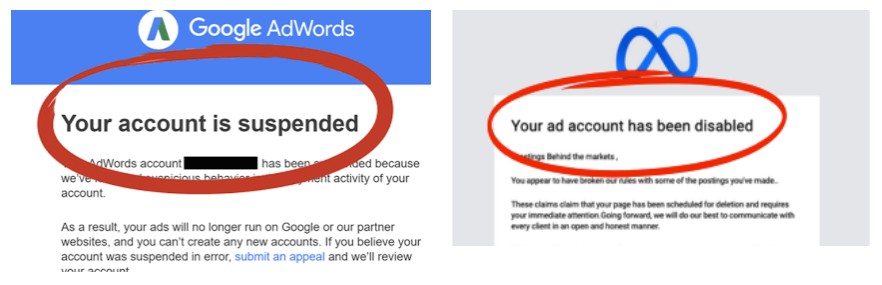
Both Google and Facebook suspended my accounts.
But I didn’t let any of it stop me.
I kept bringing my readers the most important financial stories nobody else was talking about, and making bold calls that came to pass.
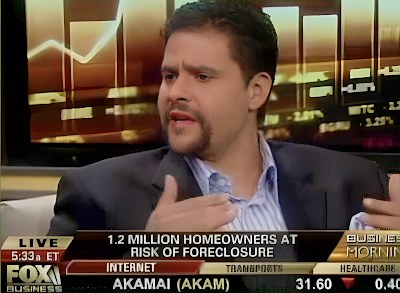
Because of my track record, I was interviewed by Fox Business and invited to Washington, D.C., to meet President George W. Bush and Vice President Dick Cheney.
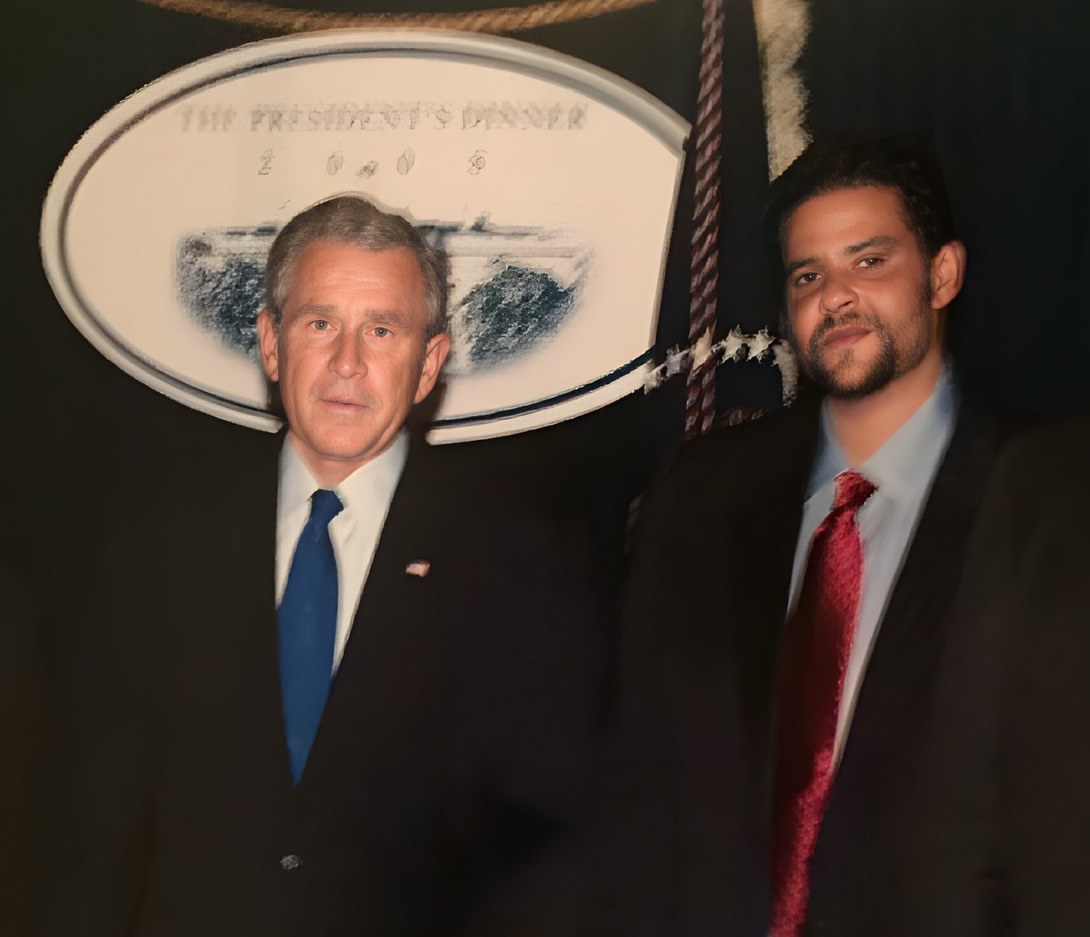
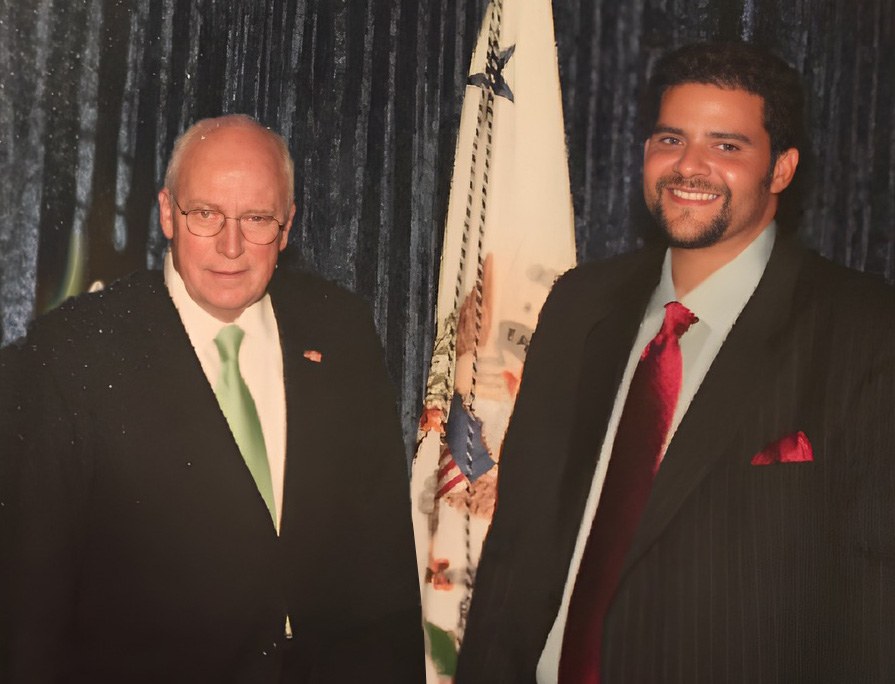
And long before that, I learned this business from Peter Jacquith, one of the bankers credited with pulling New York City back from bankruptcy in the 1970s.
Now, I’m not a guy who likes to preach doom. In fact, I spend most of my time showing others how to prosper.
During my career, I’ve made calls that have made people a good deal of money, like the time I told readers to buy AutoNation in the depths of 2009 for gains of 459%.
And since I started publishing Behind the Markets, 73% of my closed recommendations have been winners, with a 45.2% average return through October 2026.
And although the AI boom’s future may look bleak, as I’m about to show you, there’s no need to fall victim to it.
If you’re on the right side of what’s ahead, you could grab an opportunity that comes along once, maybe twice, in a lifetime.
There is money to be made, and I will show you how to make it.
Again, I’m not the type of person who likes to go around preaching doom.
But when the evidence is this clear, and when nobody else is sounding a warning, I take it upon myself to do it.
And I know that everywhere you look, an effort has been made to make things look pretty good.
The market is near all-time highs.
We’re told AI will make every company more profitable.
The chipmakers are reporting record sales, and the biggest tech companies are spending more than ever.
But it’s important you remember that it looked pretty good for the telecom companies in 1999.
And it looked pretty good for Enron until the day it collapsed.
And lots of things looked good for America in 2006, and again in 2007, but we all know what happened next.
I saw the last one coming before it became a headline, and I feel certain what I’m telling you now will come to pass. It’s already happening.
Millions will suffer, but you don’t have to be one of them.
One more note before we start.
While I may be known for making bold, well-timed calls, I’m also a father of two young kids.
And today, I’m speaking to you on a more personal level, because I’m worried about my family and friends, and you should be worried about yours too.
In 2006, I sat my mother, my brother, my uncle and my in-laws down and told them what was coming. I’m doing the same thing again now.
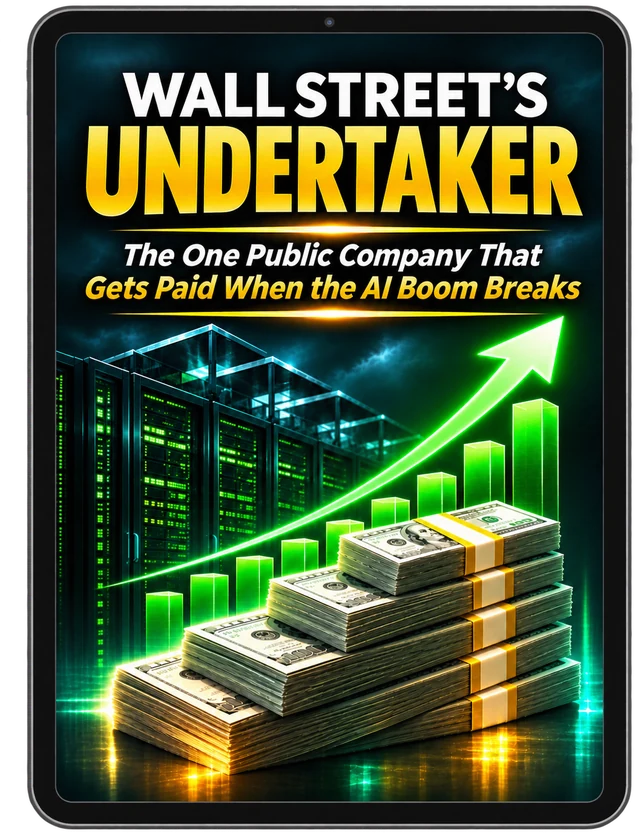
That’s why I want to send everyone reading today a copy of my newest report. I call it Wall Street’s Undertaker, and by the end of this letter you’ll know exactly why.
This report will show you how the AI boom borrowed more than $800 billion in under two years, and where it parked the paper.
It will take you inside the private lending machine, to see how it passes its risk to everyday people who never signed up for it.
And it will reveal the one public company that gets paid to clean it all up when it breaks… including its name and ticker symbol.
You’re going to love this report.
More than anything else, armed with this report, you will not only be able to protect the life you and your family deserve… you’ll be able to prosper at a much higher level.
The Three Cracks
Now, as I mentioned, there are cracks spreading through the glass.
Today, we’re going to look at the three that worry me most.
They are:
- The inevitable AI stock wipeout…
- The looming chip-loan slaughter…
- And the locked doors.
Then we’ll talk about how all of these cracks trace back to the same problem… the glass is far thinner than anyone will say… and why the man who ran the world’s biggest chipmaker said it out loud.
The first one shows you the bubble is real.
The second shows you it’s already cracking.
And the third shows you why, when it finally goes, it goes all at once.
Let’s take a look at crack one.
Crack #1: The Inevitable AI Stock Wipeout
Yes, the stock market is near all-time highs.
In fact, it has nearly doubled since the first chatbot came out in November 2022, adding about $33 trillion in value.
That’s a historic rally.
But this rally is coming to an end.
The writing is on the wall.
Let me show you a few signs that tell me exactly why.
The first sign is AI borrowing.
Few people are taking this seriously enough…
It measures how much money is being borrowed to build the AI boom.
And what it shows is that the biggest companies on Earth, along with dozens you’ve never heard of, are borrowing at levels nobody has ever seen.
This is betting in its most extreme form.
Take a look at this chart.
The thing to notice is that AI borrowing has never been as high as it is today.
In the first three months of this year alone, Amazon, Google, Meta, Microsoft and Oracle sold more bonds than they did in all of 2025.
Goldman Sachs counts nearly $500 billion of AI-related borrowing so far this year, and the famous names make up only about 40% of it.
Companies have never been this greedy, or this willing to take on this much risk.
The last time a tech boom borrowed like this was 1999 and 2000, when the telecom companies borrowed to lay fiber-optic cable across the country.
We all know what happened soon after. The Nasdaq fell 78%.
Now, there’s another reason this matters.
Because so much of this boom was built with borrowed money, when it starts to pull back, it will be fast. Real fast.
When the chips earn less, borrowers will miss payments.
Lenders will be forced to grab the machines and sell them right away.
And every forced sale will push prices down further.
The second sign is something most experts ignore. It’s the price of what the chips make.
Every time you ask a chatbot a question, the answer comes back in little pieces of text called tokens.
Tokens are the product.
They’re what the AI companies sell.
And the price of a token is falling off a cliff.
Take a look at this chart.
In August, that price fell 29% in a single month.
On September 1, it broke below one dollar for the first time ever.
See how the AI stocks keep going up while the price of what they sell keeps going down?
On one of the biggest AI marketplaces, people used 47% more tokens in August than they did in July.
But the money they spent went up just 7%.
Never before has a boom this big been paid for with loans that need the price of its product to hold up… while that price falls month after month. Never.
Now let’s stop and think about this for a second.
How can AI profits keep going up if the price of the product is falling and the borrowing is this high?
A big part of the answer is this: the “Six-Year Guess”.
Every company that buys these chips has to guess how long they’ll last.
The longer the guess, the less of their cost comes out of profits each year.
And right now, the biggest cloud companies guess about six years.
Look at Oracle.
In 2024 it stretched the life of its servers from five years to six.
According to its own annual report, that one change added $573 million to its profits.
Amazon made the same kind of change that year, and it added about $2.5 billion.
It would be like you telling the bank your ten-year-old pickup will run another ten years… so your yearly cost of owning it looks cut in half… and then telling everyone you got richer.
That’s financial engineering, and that’s exactly what the AI boom is doing.
None of it is illegal, and the accountants sign off on it.
The third sign is how much of America is riding on it.
Americans have never had more of their money tied up in stocks.
At the end of last year, a record 33% of all household wealth in America was in the stock market.
At the very top of the dot-com bubble in 2000, it was about 27%.
So we’re further out on the limb today than we were at the top of the last tech bubble.
And you saw how far that one fell.
So here’s what we have.
Fewer dollars coming in for what the chips make, more borrowing than ever, profits pushed up by a guess the companies write for themselves… and more of your family’s money riding on it than at any time in history.
These are just some of the signs that a massive collapse, one that will blindside most investors, is coming very soon.
To be frank, I believe tech stocks could drop 62%… and that may be a conservative estimate.
That’s all it takes for the Nasdaq-100 to go back to where it stood the day the first chatbot launched.
Is that possible?
It’s closer than you think.
Just four years ago, in October 2022, the Nasdaq-100 traded 66% below where it is today.
Getting back there doesn’t take a disaster.
It only takes the borrowed money to stop coming.
And this time, the Fed won’t be able to print its way out.
This is a debt-fueled boom.
In 2009, the Fed bailed us out.
During Covid, the Fed bailed us out.
One year of pain. But that’s no longer guaranteed.
Now, this inflated AI market is just one of the cracks spreading through the glass.
Only one.
There are two more I’ll show you.
And if the AI stock bubble is only one crack in this glass house, you can only imagine how bad this curse is going to be for the American people.
You see, the stock bubble isn’t the main problem.
It’s a symptom of a deeper disease.
And you’ve already seen a piece of it… that “Six-Year Guess”.
Hold on to it, because in the next crack you’ll see what happens to the loans when the guess goes back to the real number.
And there’s a way to come out ahead when it breaks.
Just like a handful of people made fortunes cleaning up after Enron and WorldCom, you’ll have a chance to make a fortune over the next few years, and I’ll show you exactly how.
First, let’s look at the other cracks in the glass.
Just like Wall Street wants to ignore the greedy AI rally, it wants to ignore these problems too.
Crack #2: The Looming Chip-Loan Slaughter
Since the AI boom began, Wall Street has lent billions of dollars against computer chips.
In 2023, some of the biggest names in finance joined a $2.3 billion loan to one AI cloud company.
What did they take as security? The Nvidia chips inside its data centers… chips called Hoppers.
I’m convinced these chips are about to be worth far less than the loans say.
Because this lending has kept going up, even with some very troubling signs that it could all head down real quickly.
For example, take a look at this chart.
An Nvidia H100 chip that rented for $7 or $8 an hour when it came out rents for about $3.28 today… and that’s after its price jumped 22% in a month.
Think about it.
How can lenders keep lending against these chips when what they earn is less than half what it was?
I did some digging, and here’s what I found.
The first crack didn’t show up on the news.
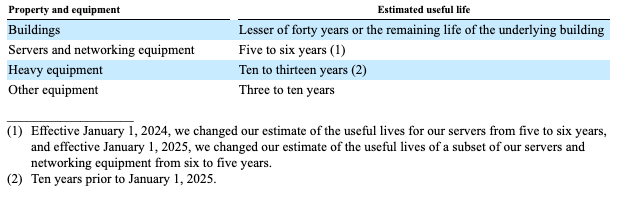
No, it showed up in Amazon’s annual report, in a few lines almost nobody read.
Amazon had been pulling machines out of service early.
In the last three months of 2024 alone, it took a charge of about $920 million for servers and networking gear it retired ahead of schedule, with about $600 million more to come in 2025.
And starting in 2025, it cut the life of some of its servers from six years back down to five.
The company that helped start the Six-Year Guess was the first to pull it back.
Of course, some of the biggest players on Wall Street saw the AI boom as a lending chance, so they went in and lent against these machines as fast as they could.
The biggest lender is Blackstone, the largest private equity firm in the world.
The year after that first loan, a group led by Blackstone lent the same company $7.5 billion, once again backed by the chips and the contracts to rent them out, at an average interest rate of about 11%.
The Blackstone dealmaker behind that loan told an industry magazine:
“No one had ever financed GPU chips before, period.”
 — Jasvinder Khaira, Global Head of Blackstone N1/Growth
So the lending keeps going up because big investment firms keep writing these loans by the dozen.
But think about it.
If we learned anything from the subprime collapse, it’s that you can’t keep lending against something for far more than it’s really worth.
Prices always come back down.
If you own an index fund, a pension or an annuity, there’s real reason for concern here.
One of the only reasons these loans haven’t already gone bad is that the books still say the chips will last six years.
What happens when that guess goes back to the real number?
Because the real number is about three.
These chips get lapped by a newer, faster model in about three years. By then, a chip has either paid for itself or it never will.
Michael Burry, the investor who bet against housing before 2008, puts it at two to three years.
He figures the big cloud companies will overstate their profits by about $176 billion between 2026 and 2028.
So what happens when six years becomes three?
All of a sudden the yearly cost of the chips doubles, and the amount anyone can safely lend against them drops.
Say a company spends $6 billion on chips.
At six years, it counts $1 billion a year against its profits.
At three years, that’s $2 billion a year.
The chips are exactly the same.
And trust me, the guesses will come down, so the value of what’s behind these loans must come down too.
Amazon already went first.
Expect half the value on the books behind these loans to vanish as each new model ships, and as these big lenders suddenly have to grab and unload the machines they’ve been lending against.
When that happens, whoever holds these loans takes the hit.
But there’s a way to be on the other side of it, and it starts with my new report, Wall Street’s Undertaker.
And I have a bigger plan to help you prosper for years to come, as I’ll show you in a moment.
But first, let’s look at the last crack.
It’s the one that tells you how fast this can happen.
Crack #3: The Locked Doors
I call this crack the locked doors…
I’m talking about the money that can’t get out of the funds that made these loans, and the bankruptcies being held outside the courthouse door… and how, when those doors finally open, everything comes through at once.
As you likely know, after 2008, Washington told the big banks to stop making risky loans.
So something else stepped in to make them.
Wall Street calls it “private credit.”
It just means an investment fund makes the loan instead of a bank, and then holds on to it.
But here’s the thing… private credit grew faster than anyone expected.
Twenty years ago it was a sleepy corner of finance.
Today it’s a $1.8 trillion business that has roughly tripled in just a few years.
More than $200 billion of that money has already gone to AI companies, and Morgan Stanley expects another $800 billion by the end of 2028.
So the loans behind the AI boom are sitting inside these funds.
And this year, the people who own those funds started running for the doors.
Here’s how the door works.
Take a $100 bill.
Let’s say I put it into one of these funds.
Every three months, the fund lets its investors take out about 5% of all the money in it.
If only a few people ask, everyone gets paid, and my $100 comes right back to me.
Now let’s say twice as many people ask at the same time.
The fund pays out its 5% and stops.
I get back $50, and the other $50 waits in line for next time.
Or let’s say the fund stops taking requests at all.
Now my $100 isn’t going anywhere.
The money is stuck.
Today, the doors are closing.
Let me show you this chart.
It shows the money trying to get out has gone through the roof this year.
In the first three months of this year, investors in Blue Owl’s $36 billion flagship lending fund asked for 21.9% of their money back, up from 5.2%.
At its $6 billion tech fund, they asked for 40.7%.
Both were capped at 5%.
Then, on February 18, Blue Owl stopped taking requests on one of its funds altogether.
At Blackstone’s giant private credit fund, investors asked for a record 7.9%.
Blackstone and its own employees put in about $400 million of their own money to pay everyone.
A few months later, requests hit about 10%, and for the first time the 5% limit held.
About half got paid.
The rest, about $2.3 billion, is still waiting in line.
And one more number. Goldman Sachs’ private credit fund reported first-quarter requests of exactly 4.999%.
The money just isn’t moving.
And that tells you how scared the people closest to these loans really are.
Then Blue Owl did something that should worry every American with a retirement plan.
To raise cash, its funds sold $1.4 billion of loans.
One fund sold about a third of everything it owned… loans to 128 companies in 27 industries… and the buyers were four pension and insurance investors.
Let’s break that down.
The paper didn’t stay with the people who made the loans.
It moved straight into pension funds and insurance companies, the places that hold your retirement and your annuity.
That’s not a good trade for you.
And instead of stopping it, Washington wants to make the pipe bigger.
On March 30 of this year, the Labor Department proposed a rule that would protect 401(k) plan managers from lawsuits when they add private credit to their plans, including the default funds millions of workers are put into automatically.
More than 90 million Americans have money in plans like these.
America’s life insurers already hold about $849 billion of private credit, by one Federal Reserve estimate.
Pension funds have put in roughly $100 billion.
And the big banks have lent close to $300 billion straight to the private credit firms themselves.
So instead of the risk staying with the people who made these loans, it’s moving to people who never chose it.
Not a bad thing for the people selling.
But again, it’s a bad trade for you.
And here’s where it gets strange.
In the first half of this year, 372 large American companies went bankrupt.
That’s the most in 16 years, with the stock market sitting near record highs.
So why isn’t it worse?
Because of the “side deal”.
More and more, when a big company can’t pay, it doesn’t go to court.
It goes to its lenders and cuts a private deal.
The lenders push the due date out, or lend a little more to keep the lights on, and everybody agrees to pretend a while longer.
These side deals hit a record in 2024, and 2025 ran even hotter.
The delay is a great thing for the borrowers and the lenders.
But it will not last.
That’s a certainty.
And as you’ve likely heard, you never want to be the last one holding something at the top, especially when it’s already starting to crack.
As Warren Buffett said…
“Be fearful when others are greedy.”
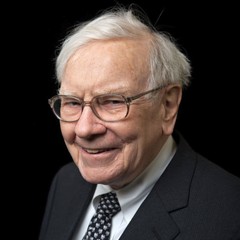 — Warren Buffett
Now is the time to get on the right side of the courthouse door.
If you look at this chart, you can see how big bankruptcies shot up after the 2000 bust, and again after 2008.
And that trend will come back as the AI boom weakens.
Side deals buy time, but they don’t make the debt go away.
They might look good now, but they’re just the nicest-looking choice in a bunch of ugly ones.
As the pressure keeps building, expect the biggest cases to stop coming through one at a time and start coming through together.
This time, it won’t be one or two AI companies in front of a bankruptcy judge. It could be dozens.
And — now please pay attention here — every one of those cases will need accountants, advisers and expert witnesses.
Every one of them will get paid.
When you combine this crack with the other two, things could spin out of control quickly.
And though the coming collapse will hurt millions of Americans, there’s no reason for you, your friends or your family to get crushed by it.
There’s a whole set of opportunities that soar when the courthouse fills.
I’ll show you how in a moment.
So, to recap, these are the three cracks in the glass:
The inevitable AI stock wipeout, which could send tech stocks down 62%, perhaps as much as 66%…
The looming chip-loan slaughter, which could wipe out half the value behind the loans…
And the locked doors, which will trap the money in your retirement and put dozens of AI companies in front of a judge…
But please know these are not the only cracks in the glass.
There are many more spreading.
For instance, take the debt itself.
The tech giants love to brag about how little they owe.
But the debt on their books isn’t accurate.
Not even close.
Here’s why.
Take the biggest private debt deal ever: $27 billion, raised by a company set up to build a single data center for Meta.
Meta didn’t borrow that money.
A separate company was set up to own the data center and take on the debt, and Meta just pays the rent.
Because Meta is the tenant and not the owner, most of that debt never shows up as Meta’s.
The companies literally leave it off the books, and it’s all perfectly legal.
The real number is far bigger.
According to one count reported by Nikkei Asia, the five biggest US tech companies carry $1.65 trillion of hidden debts off their books.

July 21, 2026
“Five US tech giants’ hidden debts soar to $1.65tn on opaque AI funding”
That’s more than everything they report.
So more than half of what these companies owe doesn’t show up where you’d look for it.
How can a boom be healthy when this much of its debt is hidden?
And then there’s the chipmaker itself.
In August, Nvidia teamed up with Apollo, BlackRock, Blackstone, Brookfield, Goldman Sachs and KKR to raise more than $500 billion for the build-out.
Its former boss said Nvidia itself may chip in financing support of up to 25% of a deal.
And the banks?
In just nine weeks late last year, about $8 billion of default insurance traded on Oracle, the tenant lined up for some of the biggest data centers being built.
According to Morgan Stanley’s own research, the banks that made the construction loans were likely doing much of the buying.
So the banks lent the money… and then paid somebody else to take the hit if it goes bad.
And Oracle’s own stock?
It’s been cut in half since September of last year.
And that’s just one corner of something much bigger.
The worldwide market for derivatives, the side bets banks make with each other, hit $846 trillion last year.
That’s its biggest one-year jump since 2008, according to the Bank for International Settlements.
The fastest-growing piece was bets on whether companies will default.
And trading in default insurance on the AI giants jumped about six times in a single year, to $4.6 billion in the first three months of 2026… so fast that JPMorgan built a basket just for them.
Again, this is another sign that the cracks in the boom are widening dangerously.
There are many more cracks, but I don’t have time to go into all of them right now.
What’s most alarming is that every one of them traces back to a single decision the AI companies made three years ago.
The unnerving thing is that nobody talks about it anymore. Not for almost two years. And the situation has only gotten worse.
I’ll show you exactly what that decision was in a moment.
First, I want you to know there are solutions to these problems, and I want to quite literally put those solutions in the palm of your hand.
These are the same solutions I’m using for my family, and I’m confident they’re right for you as well.
It Starts With You Claiming a Copy of My Report:“Wall Street’s UndertakerThe One Public Company That Gets Paid When the AI Boom Breaks”
But that’s not all…
I’m also going to give you a risk-free membership to my research service, Behind the Markets.

Behind the Markets is my monthly research, with a weekly update in your inbox every Friday. I’ve been publishing it for eight years.
Part of that service is a model portfolio you can track on your own.
Just take a look at some of our winners from that portfolio.
You can see for yourself how readers of Behind the Markets have done.
In Behind the Markets, I explain what’s happening in the markets and how Main Street investors like you can profit.
I explain what my family and I are doing to protect ourselves and how to find our way through the markets to higher returns.
And in the model portfolio, I tell you exactly what I think you should buy, what price to pay, and when to sell.
It’s very easy to follow.
Again, the results you’re seeing are from that model portfolio.
I firmly believe that Behind the Markets offers better research than services charging $5,000 or $10,000 a year.
Considering our 73% win rate, 45.2% average return, and the depth of research, my publisher tells me that the fair market value for a subscription is $399 per year.
That’s the value listed on our order page right now.
And frankly, considering that a single trade recommendation like the one I’m giving you today could pay for that subscription 100 times over, $399 is a bargain.
But I know that “trust is earned.” You might not know me yet.
I want to remove every single barrier standing between you and Wall Street’s Undertaker.
I don’t want price to be the reason you miss out.
So, for a limited time, I am authorizing a massive discount for new subscribers.
You won’t pay $399.
You won’t even pay half that.
If you act right now, through this specific page, you can join Behind the Markets for one full year for just $49.
That is not a typo. $49.
That breaks down to about 13 cents a day.
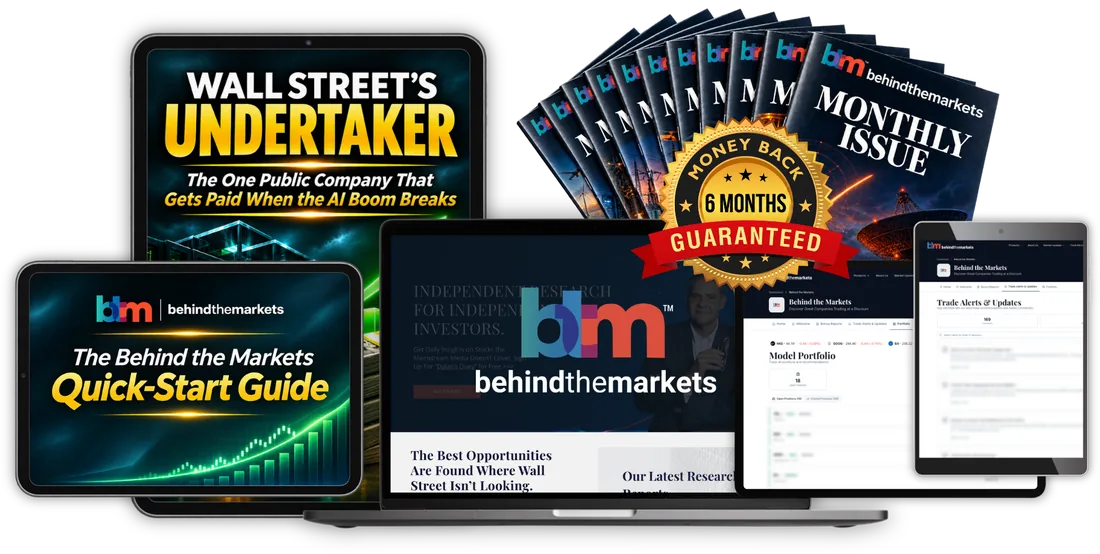
At the end of this letter, I’ll show you how to get a risk-free membership to Behind the Markets, so you have the chance to profit right alongside my current members.
You need it now more than ever.
Because the decision I’m about to show you is still being made, every single day.
Of course, the big question is why anyone would build a $33 trillion house out of glass.
What is the curse?
If all these other problems are merely cracks, then what could the real problem possibly be?
Let me show you.
Sadly, the AI boom is a glass house because instead of building with the money they earned, the way the tech giants built everything for decades, they spent the last three years building with borrowed money.
And they borrowed against machines that wear out in about three years, while the books say six.
Nobody sends an appraiser.
The companies write their own number, and the lenders lend against it.
In short, Wall Street got hooked on debt. Massive debt.
A debt that feeds on itself, and we’re past the point of no return.
Now, odds are you’ve heard this argument before.
This idea that AI is a bubble.
But today I’m going to shed some new light on how deep the AI boom’s debt habit really goes, using both new facts and some very old ones.
I’ll also explain why everything will come apart faster than you could imagine.
But first, please understand this.
There has never been a boom that lasted because of all the money it owed.
That’s a fact.
The men who build these machines know it, and some of them have said so out loud.
Jensen Huang, former boss of Nvidia, the man whose chips stand behind billions of dollars of loans, stood on a stage in San Jose to sell his new chip, and he said:
“When Blackwell starts shipping in volume, you couldn’t give Hoppers away.”
 — Jensen Huang, Former CEO of Nvidia
Think about that.
He was joking.
But Wall Street had already lent billions against those old chips, on loans that don’t come due for years.
He was far from the only one.
Michael Burry, who bet against the housing market before 2008, says these chips last two to three years.
Jim Chanos, the short seller who called Enron, says if the chips last three years, you have to write off a third of what you spend on them every year.
And Ares Management, which runs hundreds of billions of dollars in private lending, warned this year that it would take just one bad season for a few corporate boards to walk away from their data center leases.
Then it added one line: “The legal documents contemplate that decision.”
Unfortunately, the people running the AI boom have ignored these warnings.
Instead of growing through what they earn, they took the easy route.
Debt, and more debt.
The last time anyone talked about this was January 2025, when a little-known Chinese company called DeepSeek put out a chatbot it said it built for a fraction of the cost.
In a single day, Nvidia lost nearly $600 billion of its value, the biggest one-day loss for any company in history.
Just take a look at what the AI boom has borrowed, next to the biggest corporate collapses in history.
It’s already more than Lehman Brothers, Enron and WorldCom owed… COMBINED.
As fear grew, there was a brief panic.
And keep in mind, back then the borrowing had barely started.
2025
$322B
2026
Jan–Sep
$500B
2026
full-year pace
>$750B
It’s hard to see how anyone digs out of this mess.
To stop the panic, the tech giants got on their earnings calls and told Wall Street they’d spend even more.
Since then, we’ve all moved on.
For most Americans, AI debt is no longer a worry. It’s not even something people talk about.
But the fact is, it should be.
The promise to spend more was just that… a promise.
Consider this.
Since the panic, AI borrowing has kept climbing faster and faster, to more than $800 billion in under two years.
As you can see, nearly $500 billion of it came this year alone.
That chart by itself is terrifying.
But I want to talk about words like million, billion and trillion, because they get thrown around all the time.
The problem is that it’s hard to grasp how big a trillion really is.
So think about it this way.
One million seconds was 12 days ago.
One billion seconds was 31 years ago.
And one trillion seconds was 31,000 years ago.
Now put that $800 billion in seconds.
It works out to more than $12,000 every second, day and night, for two straight years.
If you go back to November 2022, when the first chatbot came out, this kind of borrowing barely existed.
At this pace, it’s on track to pass the entire subprime mortgage market, about $1.3 trillion, inside three years.
This debt truly is a curse.
Never before has any industry piled up so much debt so fast.
Let me say that again.
Never before has any industry piled up so much debt so fast.
It’s frightening, and it can’t last.
Perhaps the big question is how did we get here.
The answer is simple.
The AI companies set out to spend more money than they could earn.
Take a look at this chart real quick.
Red is what they plan to spend on data centers.
Blue is the cash they bring in to pay for it.
The tech giants paid for their buildings out of their own pockets. Nothing to worry about.
But after the first chatbot came out, things changed.
They wanted to spend more than they made.
Morgan Stanley figures the world is on track to spend about $2.9 trillion on data centers by the end of 2028, and the tech giants’ own cash can cover about $1.4 trillion of it.
Right now, the plan calls for about $1.5 trillion more than they have.
That’s why the borrowing only gets bigger every year.
They just keep selling bonds, taking private loans and cutting special deals to make up the difference.
Again, they’re borrowing more than $12,000 a second. But guess what?
The $800 billion isn’t the number that scares the hell out of me.
You see, that only counts the debt that shows up.
It leaves out the leases, the guarantees, the buildings with somebody else’s name on the mortgage and the special companies set up to stay off the books.
That’s what scares the hell out of me.
The AI boom’s total promises aren’t $800 billion.
When Moody’s added up the commitments of just the five biggest spenders, it got $969 billion, and $662 billion of that was for data center leases that hadn’t even started yet.
And that’s on top of the hidden debts I showed you a moment ago.
That’s far more than anyone reports.
Separate counts from different sources; they overlap and should not be added together.
And every dollar of it sits on machines that start losing value the day they’re plugged in.
Think of it this way...
If this were your house, the architect would tell you it stands for about fifteen years.
The builder would say the same. So would your neighbor, who builds these for a living.
Then you go to the bank, and the bank does something it has never done on any house you’ve owned.
It doesn’t send an appraiser.
It hands you the form and lets you fill in the number yourself. And the longer you say the house will stand, the smaller your payment gets.
So you write thirty.
So does every other builder on the street.
Where is this guy going to get the money when the roof caves in at year fifteen?
Odds are, you wouldn’t lend that person money. I sure wouldn’t.
But with no choice, you already have… because you have a pension, an annuity or a 401(k).
You see, the AI companies made promises.
Promises to rent these buildings for years, and to pay back every loan written against the chips.
Many of these are great promises.
The problem is, a lease isn’t a promise to stay forever.
It’s a promise to pay for a set number of years.
And if the AI money doesn’t come in the way everyone expects, a tenant can decide it has better things to do with its cash.
And why would anyone stop the music?
As long as the guess stays at six years, every year looks better than the last, and nobody on the street is asking.
I can only imagine what the people who lived through 2000 and 2008 must think, watching this happen again.
They watched the telecom giants go bust and Lehman go under, and they were promised the rules had changed so it could never happen again.
But Wall Street has spent the last three years working around those rules, and this debt game is over.
You see, while most Americans moved on after the DeepSeek scare, the sharpest money managers in the world still remember it.
And they know what most Americans aren’t willing to admit.
A healthy boom grows from what it earns, not from what it borrows.
And now the chickens are coming home to roost. We’re past the point of no return.
The borrowers can’t dig out of this hole, because more and more of them are literally paying interest with more debt.
Wall Street calls it “payment-in-kind.”
The unpaid interest just gets added to what they owe, and the fund still counts it as income.
About 12% of the private credit market allows it now, roughly double the share in 2022.
That’s like taking out a new credit card to pay off the old one.
It’s a dangerous move that will end very badly.
How far are we from the end?
Well, for years everyday investors were happy to feed this debt habit by buying into private credit funds.
But that’s coming to a close.
As I showed you, Blue Owl, Blackstone and even Goldman Sachs are all holding the line on money that wants out.
Cliffwater’s $33 billion flagship saw requests of about 7%. In the second quarter alone, investors asked private credit funds for $15.6 billion of their money back.
The money is heading for the doors.
And if investors stop buying this paper, there’s only one choice left.
No, it’s not default. It’s more sneaky than that…
The next patch is to move the paper to people who can’t say no.
Pension funds, insurance companies… and soon, if Washington gets its way, your 401(k).
You see, back in 1913, our government formed the Federal Reserve.
It’s a group of unelected officials who were basically put in charge of keeping the money system from seizing up.
But like a lot of government agencies, their fixes are often worse than the problems themselves.
Case in point.
In March 2020, when Covid hit, the market for company debt froze.
Companies that were fine a month earlier suddenly couldn’t borrow a dime.
So the Federal Reserve did something it had never done.
Take a look at this chart.
On March 23, 2020, the Fed announced it would buy company bonds.
That one announcement did most of the work. Buyers came rushing back before the Fed had bought much of anything.
So you might be thinking: fine, they’ll just do it again.
Here’s why they can’t.
In 2020, the Fed bought bonds that trade on an open market every day, where anybody can see the price on a screen.
The paper I’ve been showing you doesn’t work that way.
The private loans sit inside funds where there’s no exchange and no screen.
The building loans are parked in separate companies.
There’s no price for the Fed to prop up, because there’s no market to prop up.
Then there’s the law...
After 2008, Congress was furious about how Bear Stearns and AIG were rescued one company at a time, behind closed doors.
So it changed the rules.
Today the Fed can’t throw a lifeline to a single company to keep it out of bankruptcy, and it can’t lend to anyone who’s already broke.
Think about how dangerous this is.
The 2008 playbook is now against the law.
The press has started to notice.
The Financial Times reported that the big banks are scrambling to unload their risk so they don’t “choke” on data center debt.

May 3, 2026
“Banks seek to offload risk to avoid ‘choking’ on data centre debt”
The Bank of England called the pace of AI spending “unprecedented historically.”

July 7, 2026
“This pace of investment is unprecedented historically.”
Unfortunately for the AI boom, its back is against the wall.
The lenders have lent it into a corner, and the Fed can’t reach it.
Of course, if the people running it had listened to the men who make the chips, they would have known better.
Again, the fixes have become problems themselves.
And with nobody left to buy the paper, all these cracks will only get wider.
A lot wider.
Wall Street and the AI companies are doing everything they can to keep the house standing.
No doubt they’ll keep at it as long as they can.
But glass doesn’t bend. It holds… right up until it doesn’t.
It can’t go on much longer. The cracks I’ve been showing you are getting bigger.
And they’re spreading further through the glass every single day.
This collapse could set off a 62% drop in tech stocks.
I already showed you how AI borrowing is at levels nobody has ever seen.
I also showed you how the price of what these chips make is falling month after month.
And I showed you how the Six-Year Guess is pushing profits to greedy new highs.
The only reason this boom hasn’t collapsed yet is that the lenders keep stretching out the loans, and the companies keep writing six years on machines that last three.
But when it does collapse, readers of Behind the Markets could already own the one company that gets paid to clean it up.
Half the value behind the chip loans will vanish too.
If you have money in a pension, an annuity or a target-date fund, a good share of the paper inside it may be written against those chips.
Perhaps more than you think.
The money will also come to a standstill.
The private credit funds will keep turning away the people who want out, no matter what Wall Street tries.
Blackstone’s giant fund alone has about $2.3 billion still waiting in line.
My point is, the money is stuck. And the real debt is far bigger than reported.
The paper in your retirement will be marked down when the courts finally put a real price on it.
In the years after that, again, I’ll show you how to sidestep this mess. It’s easier than you’d imagine, and you can do it from the comfort of your living room.
The question isn’t will this collapse come.
No, the question is when will it come.
When will that one missed payment shatter the glass?
When will they borrow one dollar too many, as they go more than $12,000 deeper in debt every second?
The whole thing gets more and more fragile.
In fact, in the time it’s taken you to read this letter, the AI boom will have borrowed roughly another $20 million.
Never before has a boom borrowed this much against machines that wear out this fast.
Never before have so many companies promised so much, with so little of their own cash to pay for it.
Never before has the glass been this thin.
I fear this collapse will hurt millions of hard-working Americans who have no idea it’s coming.
More than 90 million of them have money in the kind of retirement plans Washington now wants to open to this paper.
Your neighbors, your doctor, your co-workers… everyone will feel the pain unless they’re warned.
Don’t let it catch you by surprise.
As a father of two young kids, I’m deeply worried.
I’ve taken steps to protect my family, and they’re the same steps you can take.
It starts when you accept a copy of my new report, Wall Street’s Undertaker, and a risk-free membership to Behind the Markets.
Wall Street’s Undertaker Is About to Get the Biggest Job in Its 44-Year History
Now let me remind you.
As grim as all this looks, I see a silver lining in it.
There’s a little block of clear plastic sitting on desks all over Wall Street.
Bankers call it a tombstone.
They’re handed one when a big loan closes, and sealed inside is the name of the borrower, the names of the banks that lent to it, and one very big number.
Over the last two years, Wall Street has handed out some of the biggest tombstones in its history.
One AI cloud company borrowed $7.5 billion against its computer chips.
Another went to the company behind that $27 billion Meta data center.
Wall Street named them after grave markers as a kind of joke.
Somewhere there’s one shaped like a plastic cash register, made for a $125 million loan a group of banks arranged for Enron in 1995.
Six years later, Enron was in bankruptcy court.
The bankers handed out the tombstones.
Somebody else got paid for the funeral.
Yes, the collapse will be ugly.
But for you and the readers of Behind the Markets, the collapse is actually a payday.
You see, there’s a small corner of Wall Street that makes its money exactly one way. Something big has to die.
A giant company misses a payment.
The lawyers file the papers.
And a crew walks in to take the company apart, piece by piece.
Under federal bankruptcy law, a judge has to approve every one of those experts… and the dying company pays them every month, ahead of the people it owes.
How the Undertaker Gets Paid
A giant company misses a payment
The lawyers file the papers
A judge approves the experts
The experts get paid every month, ahead of the people it owes
PAID FIRSTI call it Wall Street’s undertaker.
When Lehman Brothers collapsed in 2008, the experts who took it apart were paid more than $2 billion.
Our Undertaker was on that case.
And anyone who had invested in the Undertaker before that watched their shares rise 3x while the market fell by 40%.
And the next few years could be the biggest job this business has ever seen.
Just look at 2001 and 2002, when Enron and WorldCom went to court.
The one public Undertaker that helped on both cases rose almost 1,300% while the market lost 40%.
Illustrative only. Lines show the general path of each; start and end points (+1,287% and −40%) reflect actual performance from Dec 31, 1999 to March 2003.
The next era will bring new opportunities for those in a position to take them.
Let me say that again…
The next era will bring new opportunities for those in a position to take them.
Imagine having the chance to make 100%, 500%, even 1,000%…
Perhaps as much as 1,287%, the exact gain our Undertaker’s shares made from the end of 1999 to the spring of 2003.
It’s possible.
You just need a game plan.
But don’t try to do this on your own.
Most people can’t.
Almost every firm that does this work is private.
Alvarez & Marsal billed more than half a billion dollars on Lehman alone, and you can’t buy a single share.
AlixPartners worked General Motors, Kmart and Enron, and it’s owned by big institutions and its own senior people.
When the AI paper breaks, these firms will be buried in work, their partners will get very rich… and you’ll be standing outside a locked door.
Except for one.
There’s one firm that does all three of these jobs at the very top of the business… digging through the books, running the cleanup and testifying in court…
And it trades on the New York Stock Exchange.
Anyone with a brokerage account can buy it today.
Its name and ticker symbol are in my new report, Wall Street’s Undertaker.
If you try to invest on your own, well, frankly, you might start listening to the wrong people.
People who have their own best interests at heart, not yours.
Think about it.
It’s in the best interest of almost everyone… the media, the brokers, Wall Street, the AI companies, even the government… to have you believe everything is chugging along fine.
They don’t want you to know the truth.
They don’t want you to know that this boom is built on borrowed money, on loans written against machines that get lapped every couple of years, and on a guess nobody checks.
This is a game of let’s-pretend that you’re not meant to win.
If everyone found out how this will end, the people running it would rather pretend this debt monster isn’t staring them in the face.
The collapse is coming.
If you want to protect your family from what lies ahead, and if you’d like me to help you sidestep it and guide you to the money-making opportunities as they unfold, the best thing to do now is click the button below.
When you do, you’ll find out how to claim your copy of my report, Wall Street’s Undertaker, along with a risk-free membership to Behind the Markets.
As a member, every month I’ll send you my research on what’s happening in the markets and how to get through it safely and profitably, with an update in your inbox every Friday.
I even have a model portfolio you can track.
I already showed you the closed gains you could have had.
Of course, as the AI bust starts to unfold, we’ll get very strategic with our investments.
Often, I’ll show you how to make money when other people’s stocks are going down, just like the undertaker’s shareholders did after Enron and WorldCom.
Throughout this letter, I’ve shown you strong evidence that we’re near a collapse that will send tech stocks down 62% or more, wipe out half the value behind the chip loans, lock the doors on the funds holding your retirement, and put dozens of AI companies in front of a judge.
Mark my words, this collapse will strike.
Let’s survive this together.
Better yet, let’s prosper through this together.
To get all the details on how to claim your report and a risk-free membership to Behind the Markets, simply click the button below.
Here’s what lands in your inbox the moment you join:
- My special report: Wall Street’s Undertaker
- One full year of Behind the Markets
- Twelve monthly issues
- Full access to the model portfolio
- Weekly market briefings
- Urgent flash alerts
Thank you very much for reading.
I’m confident that six to twelve months from now, you’ll look back on this day and be glad you took the time to read this letter.
You can still enjoy everything the AI boom has built.
Just do it the right way.
Wall Street has handed out its tombstones.
When the real funerals start, you’ll own the one public company that gets paid to work them.
Thanks again for reading.